
How to Use Customer Insights to Tailor Writing Content: The Ultimate Guide to Data-Driven Content Creation
In today’s digital landscape, creating content that truly resonates with your audience isn’t just about having great writing skills—it’s about understanding who you’re writing for. Customer insights have become the secret weapon of successful content creators, helping them craft messages that speak directly to their audience’s hearts and minds. If you’ve ever wondered why some content goes viral while others fall flat, the answer often lies in how well the writer understood their audience. Let’s dive into the fascinating world of customer-driven content creation and discover how you can transform your writing from good to absolutely irresistible. 📊
Table of Contents
• Understanding Customer Insights: The Foundation of Great Content
• Collecting Customer Data: Where to Find Your Golden Nuggets
• Analyzing Customer Behavior Patterns
• Creating Customer Personas for Content Strategy
• Adapting Your Writing Style to Match Customer Preferences
• Using Emotional Intelligence in Content Creation
• Measuring Content Performance Through Customer Feedback
• Common Mistakes to Avoid When Using Customer Insights
• Future-Proofing Your Content Strategy
Understanding Customer Insights: The Foundation of Great Content
Customer insights are like having a crystal ball into your audience’s mind. They’re the deep, actionable understanding of your customers’ behaviors, preferences, motivations, and pain points. Think of them as the difference between shooting arrows in the dark and having a laser-guided targeting system for your content.
When I first started writing content, I made the classic mistake of assuming I knew what my audience wanted. I’d spend hours crafting what I thought were brilliant pieces, only to watch them sink like stones in the vast ocean of the internet. It wasn’t until I started paying attention to actual customer data that my content began to truly connect. The transformation was remarkable—engagement rates soared, shares multiplied, and suddenly, people were actually reading and responding to what I wrote. ✨
Customer insights go beyond basic demographics. While knowing that your audience is “females aged 25-35” is helpful, understanding that they’re stressed working mothers who scroll through content during their 15-minute lunch breaks while worrying about their children’s screen time—now that’s powerful insight that can shape every word you write.
Collecting Customer Data: Where to Find Your Golden Nuggets
The beauty of the digital age is that customer data is everywhere—you just need to know where to look and how to interpret it. Your customers are constantly leaving breadcrumbs of valuable information through their online behavior, and collecting this data doesn’t require a PhD in data science.
Social media platforms are goldmines of customer insights. Pay attention to the comments on your posts, the questions people ask, and even the content they share from other sources. Facebook Insights, Instagram Analytics, and Twitter Analytics provide detailed information about when your audience is most active, what content they engage with most, and their demographic information.
Google Analytics is another treasure trove of information. It shows you which blog posts keep people on your site the longest, where visitors are coming from, and what devices they’re using. This information helps you understand not just what content performs well, but how and when people consume it.
Don’t overlook direct customer feedback through surveys, polls, and email responses. Sometimes the most valuable insights come from simply asking your audience what they want. I’ve discovered some of my most successful content topics through casual conversations with readers who reached out via email or social media comments. 💬
Analyzing Customer Behavior Patterns
Once you’ve collected customer data, the next step is analyzing it to identify meaningful patterns. This is where the magic happens—where raw data transforms into actionable insights that can revolutionize your content strategy.
Look for patterns in content consumption timing. Do your readers prefer short, snackable content during weekday mornings, or do they dive into longer, more comprehensive pieces on weekend afternoons? Understanding these patterns helps you plan not just what to write, but when to publish and how to structure your content.
Analyze the language your customers use when they engage with your content. Do they use formal language or prefer casual, conversational tones? Are they drawn to technical jargon or do they respond better to simple, straightforward explanations? The words your audience uses in comments and messages provide valuable clues about how you should be writing to them.
Pay attention to emotional responses as well. Which pieces of content generate the most passionate responses? What topics make people share personal stories in the comments? Understanding the emotional triggers that resonate with your audience allows you to craft content that doesn’t just inform—it moves people to action.
Creating Customer Personas for Content Strategy
Customer personas are detailed, fictional representations of your ideal customers based on real data and research. Think of them as character profiles for the people you’re writing for—complete with names, backgrounds, goals, challenges, and preferences.
Creating effective personas requires combining quantitative data with qualitative insights. Start with the hard facts: age, location, income level, education, and job title. Then add the human elements: what keeps them awake at night, what makes them feel successful, how they prefer to consume information, and what their daily routine looks like.
For example, one of my personas is “Busy Sarah”—a 32-year-old marketing manager who commutes 45 minutes each way to work, has two young children, and squeezes in content consumption during her lunch break or after the kids go to bed. Knowing this helps me write concise, scannable content with clear takeaways that Sarah can quickly digest and apply. 👩💼
The key is making your personas specific enough to guide your writing decisions but flexible enough to evolve as you learn more about your audience. These personas should influence everything from your content topics and tone to your formatting and call-to-action placement.
Adapting Your Writing Style to Match Customer Preferences
Once you understand your audience deeply, adapting your writing style becomes a natural extension of that knowledge. It’s like learning to speak your audience’s language—not just literally, but emotionally and culturally as well.
Consider the complexity level that resonates with your audience. A technical audience might appreciate detailed explanations and industry jargon, while a general audience might prefer analogies and simple language. I learned this lesson the hard way when I wrote a highly technical piece about SEO algorithms for a beginner audience—the engagement was practically nonexistent because I’d completely misjudged my readers’ knowledge level.
Sentence structure and paragraph length also matter more than you might think. If your audience primarily reads on mobile devices during short breaks, shorter paragraphs and sentences work better. If they’re settling in for deep, thoughtful reading sessions, you have more flexibility to explore complex ideas in longer formats.
The tone of your writing should reflect your audience’s preferences and expectations. Some audiences respond to authoritative, expert voices, while others prefer friendly, conversational approaches. Professional services might require a more formal tone, while lifestyle brands often benefit from casual, relatable writing.
Using Emotional Intelligence in Content Creation
Emotional intelligence in content creation means understanding not just what your audience thinks, but how they feel. It’s about recognizing the emotional state your readers are in when they encounter your content and crafting messages that acknowledge and address those feelings.
Consider the emotional journey your customers go through when engaging with your brand. Are they frustrated when they first find you, seeking solutions to pressing problems? Are they excited about new possibilities? Understanding these emotional states helps you choose the right tone and approach for your content.
Use customer insights to identify emotional triggers that motivate your audience. Fear of missing out, desire for recognition, need for security—these emotional drivers can guide your content themes and messaging. However, it’s crucial to use this understanding ethically, helping and supporting your audience rather than manipulating them. 🎯
Storytelling becomes particularly powerful when informed by emotional intelligence. Share stories that reflect your audience’s experiences and challenges. When readers see themselves in your content, they form stronger connections with your brand and are more likely to engage and take action.
Measuring Content Performance Through Customer Feedback
Creating customer-driven content is an iterative process that requires constant measurement and refinement. The key is establishing feedback loops that help you understand how well your content is resonating with your audience and where you can improve.
Beyond traditional metrics like page views and time on site, pay attention to qualitative feedback. Comments, social media mentions, and email responses provide rich insights into how your content is being received. Look for patterns in the language people use when they respond—are they asking follow-up questions, sharing personal experiences, or expressing gratitude?
Engagement quality often matters more than quantity. A piece that generates thoughtful discussions and meaningful connections might be more valuable than one that gets lots of quick likes but no substantial engagement. Track metrics that align with your content goals, whether that’s building community, driving conversions, or establishing thought leadership.
Use A/B testing to validate your customer insights. Try different headlines, writing styles, or content formats with similar audiences to see what performs better. This helps you refine your understanding of customer preferences and continuously improve your content strategy.
Common Mistakes to Avoid When Using Customer Insights
While customer insights are incredibly powerful, there are several pitfalls that can derail your content strategy if you’re not careful. Learning to avoid these mistakes can save you time, effort, and potentially embarrassing missteps.
One of the biggest mistakes is over-relying on assumptions instead of actual data. It’s easy to think you know your audience, but customer behavior can be surprising and counterintuitive. I once assumed my audience preferred video content because video was trending, only to discover through analytics that they actually engaged much more with written content because they often consumed it in quiet environments where audio wasn’t practical. 📱
Another common error is treating all customer insights as equally valuable. Not all feedback represents your core audience, and not all data points are actionable. Learn to distinguish between valuable insights and outliers that might lead you astray from your primary audience’s needs.
Avoid the trap of trying to please everyone. Customer insights should help you focus your content strategy, not dilute it by trying to appeal to every possible audience segment. It’s better to create content that deeply resonates with your core audience than to create generic content that appeals to no one in particular.
Future-Proofing Your Content Strategy
Customer preferences and behaviors evolve constantly, which means your content strategy must be flexible and adaptive. Building a future-proof approach requires staying attuned to changing customer needs while maintaining the core principles that make your content valuable.
Invest in systems and processes for ongoing customer insight collection. This might include regular surveys, social media monitoring tools, or customer interview programs. The goal is to create a continuous feedback loop that keeps you informed about evolving customer preferences.
Stay aware of broader trends that might impact your audience’s behavior. Changes in technology, social norms, or economic conditions can all influence how your customers consume and interact with content. Being proactive about these changes helps you adapt your strategy before your competitors do.
Remember that while tactics and platforms may change, the fundamental principle of understanding and serving your audience remains constant. Focus on building deep customer relationships and delivering genuine value, and you’ll be able to adapt to whatever changes come your way. 🚀
Conclusion
Using customer insights to tailor your writing content isn’t just a nice-to-have skill—it’s essential for creating content that truly connects with your audience in today’s competitive digital landscape. By understanding who your customers are, what they need, and how they prefer to consume information, you can transform your content from generic messaging into powerful, personalized communication that drives real results.
The journey from data collection to content creation might seem complex, but it’s incredibly rewarding. When you see your engagement rates climb, your audience grow, and your content make a real impact on people’s lives, you’ll understand why customer-driven content creation is worth the effort. Remember, your audience is giving you the roadmap to their hearts and minds—you just need to learn how to read it.
Start small, be consistent, and always keep your audience’s needs at the center of your content strategy. The insights are there waiting for you to discover them, and your audience is ready to reward you with their attention, engagement, and loyalty when you show them that you truly understand what they need. 💫
Frequently Asked Questions
How often should I collect customer insights for my content strategy?
Customer insight collection should be an ongoing process rather than a one-time activity. Aim to review your analytics monthly, conduct customer surveys quarterly, and stay engaged with your audience daily through social media and comments. This ensures your content strategy evolves with your audience’s changing needs.
What’s the minimum amount of data needed to start using customer insights effectively?
You can start making data-driven decisions with as little as 100 engaged followers or customers. While larger sample sizes provide more reliable insights, even small amounts of quality feedback can guide your content decisions. Focus on gathering deep insights from your most engaged audience members first.
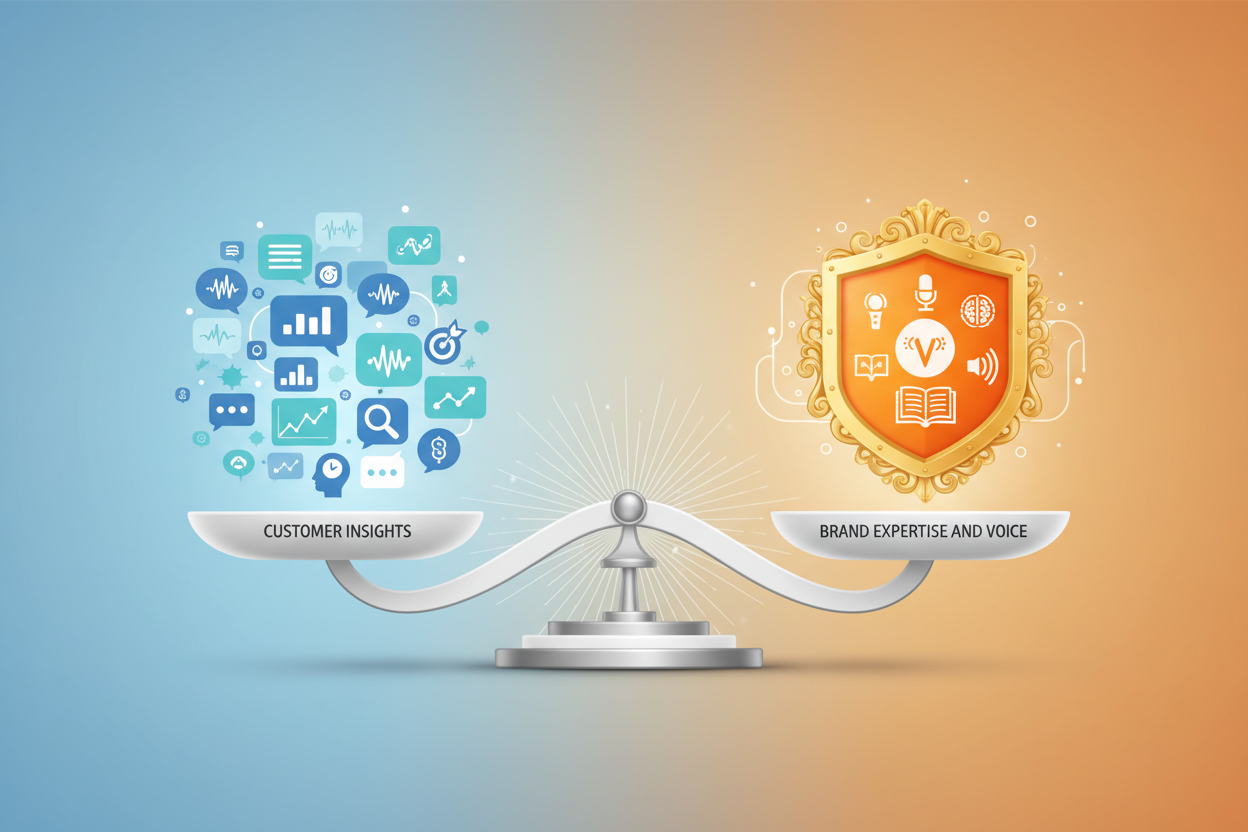
How do I balance customer insights with my brand voice and expertise?
Customer insights should inform your content topics and approach, but they shouldn’t override your brand’s unique voice and expertise. Use insights to understand how to present your knowledge in ways that resonate with your audience, rather than changing what you stand for. The goal is to be authentically helpful, not to completely transform your brand identity.
Can customer insights help with content creation for new audiences?
Absolutely! When targeting new audiences, start by researching similar brands and communities to understand general preferences and behaviors. Then use small-scale testing and direct engagement to gather specific insights about your new audience. This approach helps you avoid costly mistakes while building relationships with new customer segments.
What should I do if customer insights contradict each other?
Conflicting insights often indicate that you have multiple audience segments with different needs. Segment your audience based on behavior patterns, demographics, or preferences, and create targeted content for each group. Alternatively, look for common ground or create content that addresses multiple perspectives on the same topic.